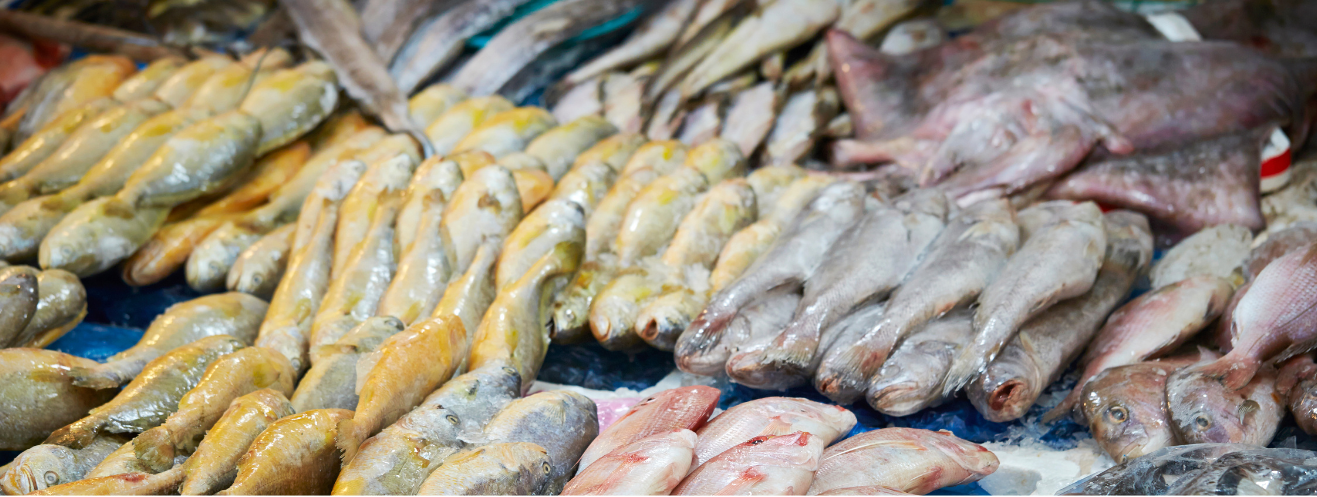


This is Tsukiji fish market in Tokyo. Here you'll find a wide selection of anything to do with fish, whether it be to have a little taster at a stand or even have a sit-down meal. A lot of peoplecome here to get the ingredients for cooking but most people come here just to see what's going on as there's so much to look at. Ginza is known for being one of Tokyo's top shopping districts and is filled with high-end cocktails and sushi bars but if you look a little further you will find what is regarded as the largest fish market in the world. It began life all the way back in 1923 in Nihonbashi. However, after it was destroyed in the Great Kanto Earthquake it was forced to relocate. It found a new home in the Tsukiji district and continued its operations in 1935. There are several sections to this market the main one being the outer market. Originally it was just the inner market which was more restricted than private but due to the popularity with visitors and its bustling atmosphere it was open to the public. The produce was initially bought from different hands but after they switched it to wholesale buyers the inner market were able to sell them on to the outer market for the general public.
Here you'll find everything you'll ever want if you have an interest in sushi seafood or cooking such as fresh sashimi, slabs of tuna, crab, octopus, sea urchin, and the list just keeps on going. But it's not just fresh produce you're also able to dine there as well with a combination of fresh sushi breakfast or lunch and a variety of restaurants.
“first tuna auction of the year set a new record”
There was actually a more famous part of Tsukiji fish market which started at five o'clock in the morning. This was the world-famous tuna auction which was limited to 100 people at a time. It was on a first-come-first-served basis and people lined up as early as 2 a.m. However, it's now closed and has recently moved to a more modern market in Toyosu. Since the move, it's been reported that the first tuna auction of the year set a new record when a restaurant chain paid a staggering price of 3 million dollars for a bluefin tuna weighing at 43 stones, It was sold to Kyoshi Kimura also known as the king of tuna. Although this may be a win for Mr. Kimura bluefin tuna has actually become critically endangered in recent years due to overfishing. Despite the move of the tuna auction, the outer market is still just as fascinating. So, there you have it Tsukiji fish market in Tokyo, have you been to a fish market bigger than this? Let me know in the comments below.
Questions:
Part 1: Comprehension
Watch and summarize the video thinking of who, what, when, where & why.
Part 2: True or False Questions
a) True or false – Some people don’t buy anything in the market and just like to have a look around. T/F
b) True or False – Ginza is known for its high-end cocktail and sushi bars. T/F
c) True or False – The fish is very expensive. T/F
d) True or False – Kyoshi Kimura bought a king tuna for 3 million dollars. T/F
Part 3: Guess the meaning of unknown vocabulary
a) "Taster" (0:10 min)
b) "Bustling atmosphere" (1:03 min)
c) "First-come-first-served basis" (2:14 min)
d) "Endangered" (2:41 min)
Part 4: Dictation
a) Fill in the blanks (0:43 - 0:53 minutes) However, _______________________________________________relocate.
b) Fill in the blanks (1:45 - 1:53 minutes) But it_____________________________________________________ restaurants.
c) Fill in the blanks (2:19 - 2:23 minutes) However, ________________________________________________________ Toyosu.
Part 5: Talking Points
Part 6: Role play Scenarios
Scenario 1: Fish Market Vendor and Customer
In this scenario, one person can act as a vendor at Tsukiji Fish Market, while the other can be a customer looking to purchase fresh seafood. The vendor can describe the different types of seafood available, make recommendations based on the customer's preferences, and negotiate a price for the purchase.
Scenario 2: Sushi Chef and Diner
One person can act as a sushi chef in a restaurant located in Tsukiji Fish Market, while the other can be a diner looking to try some fresh sushi. The chef can describe the different types of sushi available, make recommendations based on the diner's preferences, and explain the ingredients and preparation methods used.
Scenario 3: Tour Guide and Tourist
One person can act as a tour guide, while the other can be a tourist visiting Tsukiji Fish Market. The tour guide can describe the history of the market, point out interesting landmarks and attractions, and offer recommendations for the best places to eat and shop. The tourist can ask questions, take photos, and explore the market with the guidance of the tour guide.
Part 7: Writing Activity
Write a short paragraph describing a shopping mall or popular place to shop in your hometown.
Part 8: Critical Thinking - Overfishing, is fishing at the current rate sustainable?
Objective: To debate about overfishing and reach a consensus about sustainable fishing practices and bluefin tuna.
Bluefin tuna is a an endangered species. We should not be allowed to fish it.
In groups (for/against) talk about the pros and cons of this statement, then come back as a class and reach a consensus of the best strategy for sustainable fishing.
Answers:
Part 1: Comprehension
This video was created by the What Next YouTube channel and presenter Leslie heads to Tokyo to have a look at one of the biggest fish markets in the world. He visits the Tsukiji fish market in Tokyo and states that some people go there to buy ingredients for cooking at home, eat there, or just simply have a look around. The presenter then gives a brief historical background to the market and discusses things like Ginza being a popular shopping district and how it has transformed since the Great Kanto Earthquake. Next, Leslie takes the viewers on tour and describes some of the interesting and popular seafood that is available in the market. Lastly, he talks about the most famous part of the market, the auction. He states that this used to be open to the public but unfortunately this has now closed and moved to a more modern market in Toyosu. Since the move, he reports that a popular restaurant bought a tuna fish for 3 million dollars. I think he created this video to show potential travelers and people interested in fish markets what the Tsukiji fish market is like.
Part 2: True or False
A: True B: True C: False D: False
Part 3: Guess the meaning of unknown vocabulary or phrases
a) "Taster" Answer: I think taster means to have a small quantity or brief experience of something because in the video the presenter talks about having an opportunity to try some food in the market either sitting down in a restaurant or standing casually at a stand. Eating at the stand might imply that is a small quantity rather than a full meal.
b) "Bustling atmosphere" Answer: I think this means to be full of lively activity because in the video the presenter describes the market as being very popular with lots of visitors, so much so that they had to open both the inner and outer parts for the visitors.
c) "First-come-first-served basis" Answer: This means that customers are served in the order in which they arrive at the restaurant because in the video the presenter talks about how the market was so busy that people needed to get in line around 2 am to have any chance of being one of the 100 that are allowed in.
d) "Endangered" Answer: I think this means that a certain species is seriously at risk of extinction because in the video the presenter states that blue tuna is so expensive and overfished. This means that there are not many blue tunas left in the world, they are almost extinct.
Part 4: Dictation
a) Fill in the blanks (0:43 - 0:53 minutes) However, after it was destroyed in the Great Kanto Earthquake it was forced to relocate.
b) Fill in the blanks (1:45 - 1:53 minutes) But it's not just fresh produce, you're also able to dine there as well with a combination of fresh sushi breakfast or lunch and a variety of restaurants.
c) Fill in the blanks (2:19 - 2:23 minutes) However, it's now closed and has recently moved to a more modern market in Toyosu.
Part 7: Writing (example)
In my hometown, Incheon in South Korea, one of the most popular places to shop is the Incheon Chinatown. It's a vibrant and bustling area, known for its unique blend of Korean and Chinese cultures. The streets are lined with a variety of shops selling everything from traditional Korean hanboks to Chinese tea sets. You can also find many restaurants here, serving delicious Korean-Chinese fusion dishes. The architecture of the buildings is a mix of traditional Korean and Chinese styles, making it a picturesque spot for both shopping and sightseeing. This place is always lively, filled with both locals and tourists exploring the shops and enjoying street food. Going there is always an exciting experience, as there's so much to see, buy, and taste.


