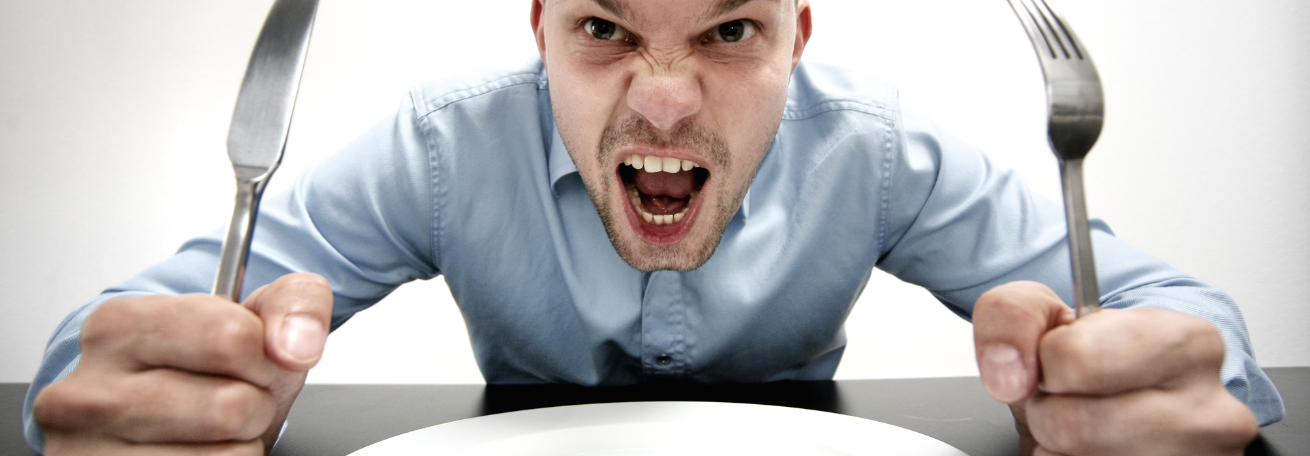


This episode of SciShow is sponsored by Snickers. It’s not, though it should be! Get on it, Snickers! It’s happened to the best of us. It’s close to dinner time, your stomach is grumbling... All of a sudden, your significant other’s foot tapping becomes too much to bear, and you lash out. Your partner has fallen victim to hanger, the grumpiness you feel when you are hungry. And it isn’t an excuse—it’s an actual physiological and psychological phenomenon. Science has shown that hanger is real. For example, people jab more pins into a voodoo doll of their spouses or choose to blast loud noises at their partner when their blood glucose levels are low. Psychologists think that this may be because hunger impairs self-control. Not acting impulsively takes brainpower, and when the brain’s low on fuel, it just doesn’t have the energy to hold back. Another explanation is that hanger is basically a mistake your brain makes when you’re not sure what’s causing your body to feel bad. That’s because some psychologists think feeling emotions is actually a combination of what’s physically going on in your body and what your mind thinks is the reason for that. So, if you don’t realize what’s making you feel off, you might pick a different emotion.
“They even reported more hatred towards the experimenter”
When you haven’t eaten in a while, you might attribute your rumbling stomach, tiredness and fuzzy head to other feelings that cause those reactions, like stress or even anger. No really—this is a thing. Scientists have shown that this can happen. For example, experimenters in a 2016 study irked 236 college students by making the computer they were using crash. Those that had fasted before the test reacted more negatively, seeming to add their hunger-related feelings to the frustration induced by the tech glitch. They even reported more hatred towards the experimenter. Hatred! And that might sound extreme, but it’s an honest mistake because hunger and anger look a lot alike physiologically. Some of the same brain regions are activated both when you feel angry and when you’re hungry. And that’s because the same brain chemical, a tiny protein called neuropeptide Y, both prompts your body to eat when your energy reserves are low and regulate aggression. Actually, it makes a lot of sense, because hunger is your brain’s way of signaling the release of hormones that increase the amount of glucose into your bloodstream so that your tissues don’t starve. And those same hormones are released in stressful situations when a boost of glucose could help you outmuscle a predator or run away. And the connection between hunger and aggression might be more than a bodily coincidence.
For our ancestors, food wasn’t always a reliable thing. Their feelings of hunger were a sign that food was scarce, so whatever they found when hungry was probably worth fighting for. Being hangrier, and thus more aggressive about securing meals, might have helped them get the fuel they needed to outcompete more complacently hungry rivals. And the legacy of that hanger lives on in us today. So, the next time you feel yourself about to bubble over with frustration, remember: It may be your body’s way of decoding your empty stomach. So go eat a snack! But not a Snickers. Yet. Thanks for asking, and thank you to our actual President of Space today, who would just like us to say that it’s “Not SR Foxley.” It’s usually SR Foxley, but this time it isn’t, and that’s the only thing that this person wanted us to say. Without our Patreon, patrons, like SR Foxley and also Not SR Foxley, we wouldn’t be able to make SciShow and answer all of your maddening questions about the universe. Thank you to all those people, everyone except Snickers.
Questions:
Part 1: Comprehension
Watch and summarize the video thinking of who, what, when, where & why.
Part 2: True or False Questions
a) True or false – The reporter believes that most of us have experienced hanger at some point in our lives. T/F
b) True or False – Some physiologists state that hanger is not real. T/F
c) True or False – Men tend to experience more hangry situations than women. T/F
d) True or False – The connection between hunger and aggression might be more than a bodily coincidence. T/F
Part 3: Guess the meaning of unknown vocabulary.
a) "Grumbling" (0:14 min)
b) "Too much to bear" (0:18 min)
c) "Fuzzy head" (1:18 min)
d) "Scarce" (2:39 min)
Part 4: Dictation
a) Fill in the blanks (1:00 - 1:10 minutes) That’s because _____________________________________________________________the reason for that.
b) Fill in the blanks (2:28 - 2:33 minutes) And the connection ________________________________________________________ coincidence.
c) Fill in the blanks (2:53 - 3:05 minutes) So, the next time ___________________________________________________________empty stomach.
Part 5: Talking Points
Part 6: Role play Scenarios
Scenario 1: Nutritionist-Patient
You can play the role of a nutritionist and your partner can play the role of a patient seeking advice on their diet. The patient can describe their current diet based on the article, and the nutritionist can provide feedback, suggestions, and recommendations for improving their diet based on their health goals.
Scenario 2: Grocery Store
You can play the role of a health-conscious shopper and your partner can play the role of a store employee. You can discuss and inquire about various food items in the store, based on the article, and ask for recommendations on selecting fresh produce, whole grains, lean proteins, and healthy fats for your diet.
Scenario 3: Family Dinner
You can play the role of a family member who follows the diet described in the article, and your partner can play the role of a family member who has different eating habits. You can have a discussion about meal planning, recipe ideas, and how to incorporate healthy foods into a family dinner while accommodating different dietary preferences.
Part 7: Writing Activity
Using mainly present simple tense, describe your diet in as much detail as possible.
Part 8: Critical Thinking - How to manage stress.
Objective: To create a presentation on how to manage stress.
In groups create a presentation on the best way to manage stress.
Come up with a 5 point strategy and present it to the class. Then, as a class reach a consensus on the best 5 ways to manage stress.
Answers:
Part 1: Comprehension
This video was created by SciShow. The speaker states that hanger is the grumpiness you feel when you are hungry and he looks into the science behind the feeling. In the video, the speaker starts by giving examples of when people feel hangry, like if we are very hungry just before dinner and our partner’s foot is tapping, we might feel angry, he then reports that hangar is real. Additionally, the reporter states that psychologists think that hunger impairs self-control and this could lead to anger or that hanger is basically a mistake your brain makes when you’re not sure what’s causing your body to feel bad. The reporter concludes that hangry makes sense because hunger is your brain’s way of signaling the release of hormones that increase the amount of glucose into your bloodstream so that your tissues don’t starve and those same hormones are released when you are in stressful situations.
Part 2: True or False
A: True B: False C: False D: True
Part 4: Dictation
a) Fill in the blanks (1:00 - 1:10 minutes) That’s because some psychologists think feeling emotions is actually a combination of what’s physically going on in your body and what your mind thinks is the reason for that.
b) Fill in the blanks (2:28 - 2:33 minutes) And the connection between hunger and aggression might be more than a bodily coincidence.
c) Fill in the blanks (2:53 - 3:05 minutes) So, the next time you feel yourself about to bubble over with frustration, remember: It may be your body’s way of decoding your empty stomach.
Part 7: Writing (example)
My diet focuses on a balanced and varied selection from different food groups for optimal health, emphasizing whole, minimally processed foods. For breakfast, I enjoy oatmeal with bananas, honey, and cinnamon, accompanied by green tea. Lunch is typically a large salad with mixed greens, vegetables, grilled chicken or tofu, and a homemade vinaigrette, often with a side of quinoa or brown rice. My mid-afternoon snack consists of fresh fruit and nuts like almonds or walnuts. Dinner includes a lean protein source such as fish, chicken, or legumes, alongside a variety of vegetables and a serving of whole grains. I stay hydrated with plenty of water throughout the day, occasionally enjoying milk or herbal tea in the evening. I also limit processed foods, added sugars, and unhealthy fats, paying attention to portion sizes. Cooking at home and trying new recipes keeps my meals interesting and flavorful.


